
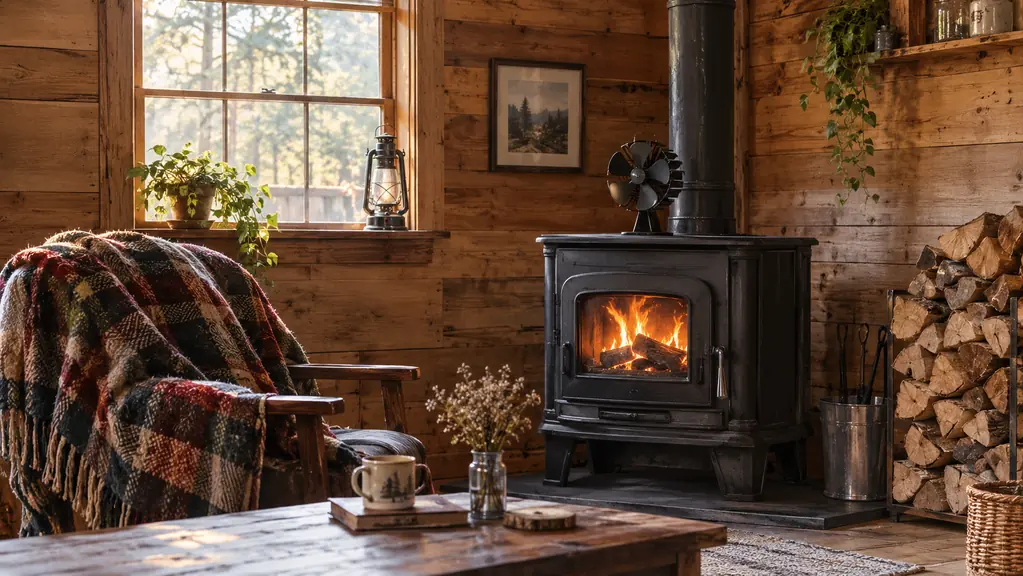
A wood stove does two things well and one thing badly. It burns wood clean and it throws serious heat. What it does badly is move that heat anywhere past the first six feet. My stove sits in the corner of a 24 by 32 foot cabin, and for the first two winters I could stand by the fire in a t-shirt and still see my breath at the kitchen end of the room. I was burning good oak to heat the ceiling and the corner it was already sitting in.
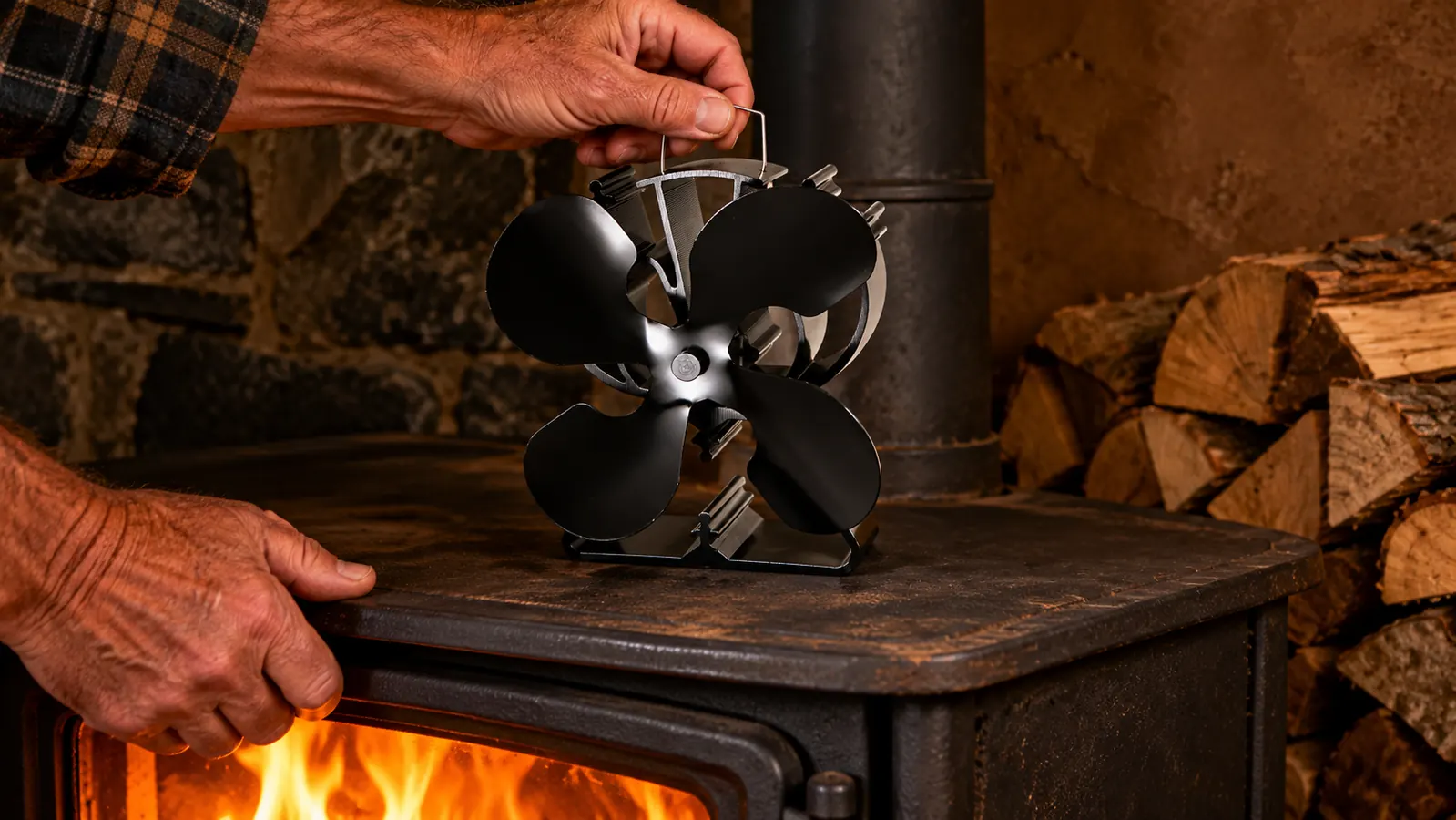
The fix turned out to be a small fan that sits on the stove top and runs on nothing but the heat under it. Mine is a VODA wood stove fan, the four blade heat powered model. It is 8.27 inches wide, 8.27 inches tall and 4.72 inches deep, and it weighs 600 grams. No cord, no batteries, no draw from my solar array. I put it on the stove, the stove gets hot, the fan spins up, and the warm air that was stacking itself against the ceiling gets pushed out into the room instead. I have run one for a while now and I keep finding reasons it was worth the shelf space. Here are ten.
You already paid for that heat. Move it.
Four aluminum blades, heat powered, 3 watts pulled from the stove top and nothing pulled from your battery bank.
Amazon Check Today's Price on Amazon →It puts the heat you already paid for where you actually sit
You cut, split, stacked and carried every stick that goes into that firebox. The fan does not make new heat. It moves the heat that was going to waste against the ceiling toward the chair, the table, the bed. That distinction matters when you are off grid, because the cheapest unit of heat is the one already in the room and not being used. Anything that redistributes it is a straight gain, and a gain that costs you nothing to run.
I burn less wood holding the same temperature
Before the fan, my answer to a cold far end was a hotter stove. More splits, damper open wider, reload sooner. After the fan went on, I found I was keeping the same room temperature with a smaller fire. I load the same way, I just do not have to push the stove to prove a point. Over a winter that shows up in the woodpile. I noticed it in February, when I still had more rows left than I usually do.
It takes nothing from the solar array
This is the one that sold me. My array is a ground mount feeding a battery bank in the power shed, and in December it is not generous. An electric fan is a small load, but it is a load all winter, and it runs during the exact stretch when production is worst. The VODA fan draws no electricity at all. It is heat powered, rated at 3 watts, and those 3 watts come out of the stove top, not the batteries.
There is nothing to switch on, so it works at 3 a.m.
No button to press, no setting to remember. Heat activated means the fan starts when the stove is hot and stops when it cools. That sounds small until you are the one getting up in the night to reload. I stir, I toss two splits in, I go back to bed. The stove comes up, the fan comes up with it, and the bedroom end gets warm without me standing there supervising it. Dana can run the stove without learning a sequence.
It makes a small fire act like a big one
A small fire in a cold cabin used to be a waste of kindling. It would heat the stove top and nothing else. With the fan moving air across the top, a modest fire still turns the room over. That changes how I run the stove in the fall and spring, and honestly it changes how I run it on a mild January night when I do not want to load the box full before bed just to stay warm until morning.
It kills the hot ceiling, cold floor problem
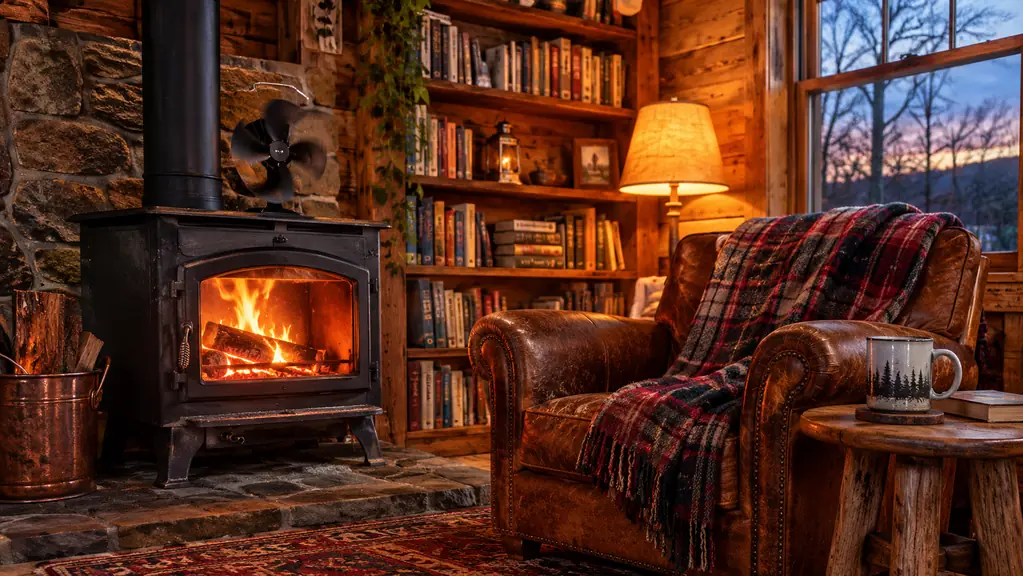
Heat stacks. Stand on a chair in my cabin in January and you can feel the difference between ankle height and hat height. The fan breaks that layer up and pushes it sideways instead of letting it pool overhead. It is not a whole house system and I will not pretend it is. It is a 240 rpm fan with four blades sitting on a hot surface, and that is enough to change a room you hurry through into a room you sit down in.
It runs at 25 dB, so you can sleep beside it
25 dB is quieter than the refrigerator and quieter than my inverter. In a cabin where the loudest thing at night is the fire itself, a fan that whines would be unbearable. This one does not. I can hear it if I listen for it and I cannot hear it from the bedroom. That matters more than people expect, because the whole reason to live out here is that it is quiet, and gear that spoils the quiet is not a bargain at any price.
Aluminum and four blades, nothing to service
No filter to change, no oil to add, no battery to replace every spring. The VODA fan is aluminum with four blades and the whole thing is 600 grams. My maintenance routine is wiping the dust off the blades when I clean the flue. I have owned equipment on this property that needed more attention in a week than this fan has needed in total, and the simple stuff is the stuff that is still working in year six.
It carries the shoulder seasons without a second heat source
October and April are the awkward months. Cold enough to want heat, warm enough that a full fire runs you out of the room. Because the fan lets a small fire do the work of a bigger one, I am not firing the stove hard in a 45 degree week and I am not dragging out a space heater either. Warming a bedroom, a kitchen and a living room off one fire is the whole job, and the fan is what makes that finish line reachable.
It weighs 600 grams, so it comes to camp with me
The fan goes in the truck when I head out for a weekend. It sits on the camp stove the same way it sits on the cabin stove. No power, no cord, no outlet to hunt for. One small piece of gear that turns a cold bunk into a warm one is worth carrying. That is what I keep coming back to. It is not a gadget. It is a way of getting full use out of heat I already made, and I am thankful for a warm room and a shorter walk to the woodpile.
What I'd Skip
I would skip the urge to add an electric fan alongside it. That was my first instinct and it was a waste of an outlet and a solar load. I would also skip the bigger five and eight blade models if you are heating one room, because the four blade version at 8.27 inches moves plenty for a cabin this size. And skip setting it anywhere but flat on the stove top. A fan sitting off level rattles, and rattles are what make people write reviews saying these things are noisy.
Same room temperature, smaller fire. I noticed it in February, when I still had more rows of wood left than I usually do.
What I cannot skip past is the honest limitation. It only works when the stove is hot. On a cold start you are on your own until the stove top comes up, and if the fire is out it does nothing for you at all. Mine has been reliable, but the listing sits at 4.1 stars across a lot of reviews, and that usually means a few units arrive noisy or quit early. Buy from a seller with a return window and test it on the first fire, not the tenth.
Put the heat where you sit, not where the ceiling is.
Heat powered, 600 grams, 25 dB, no cord and no draw on your batteries. It goes on the stove top and starts working the first time the stove comes up to temperature.
Amazon Check Today's Price on Amazon →