
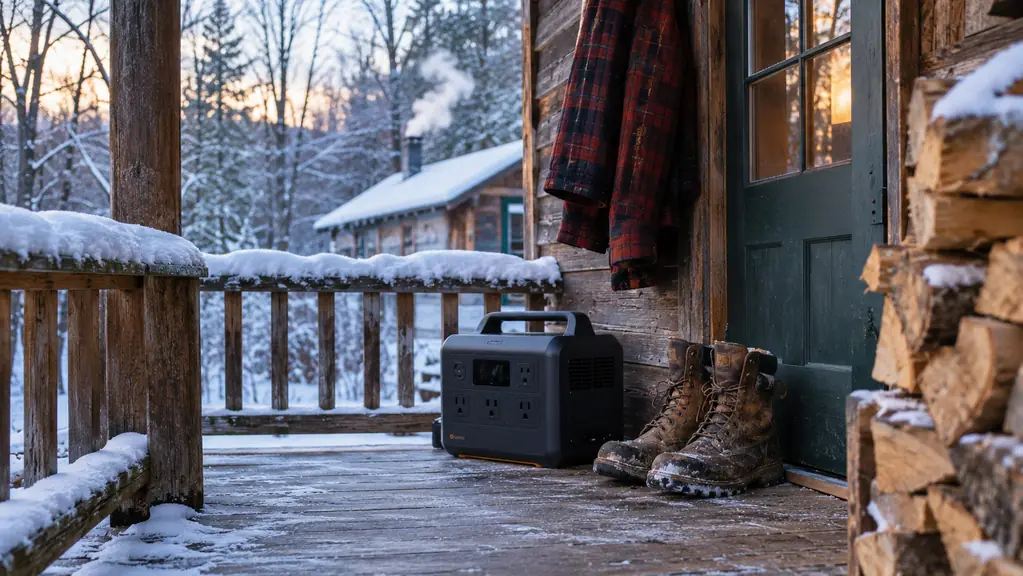
The cold snap came the second week of January, the kind where the thermometer on the porch post sits at four below and does not move for three days. The array on the ground mount was under a foot of snow. The well pump still had to run, and the pipe from the pressure tank out to the shed still had to stay thawed. That is the week I stopped thinking of the Jackery Explorer 1000 v2 as camping gear and started treating it as a permanent piece of the power shed.
I have been off the grid six years, in a 24 by 32 foot cabin I finished myself on 14 wooded acres about an hour outside Syracuse. Dana and I heat with wood, draw from a drilled well, and run a small solar array on a ground mount behind the shed. Before this unit I had been through a string of cheap inverters and one heavy generator I could not stand to listen to. The Jackery came into the shed in late October and I gave it the worst stretch of the year on purpose, because a mild week in July tells you nothing about anything. What I wanted to know was whether it would hold through February. I ran it daily from November into March, and this is the honest accounting.
The Quick Verdict
A real second line of power for a small cabin, light enough to move and steady enough to trust with a fridge overnight. It is not a whole house battery, and it does not pretend to be.
Amazon Check Today's Price →The Unit That Carried Our Fridge Through a Four Below Week
1,024 watt hours of lithium iron phosphate, 1,500 watts of output, and about 23 pounds you can pick up with one hand. This is the one sitting on the shelf in my power shed.
Amazon Check Today's Price on Amazon →How I've Used It
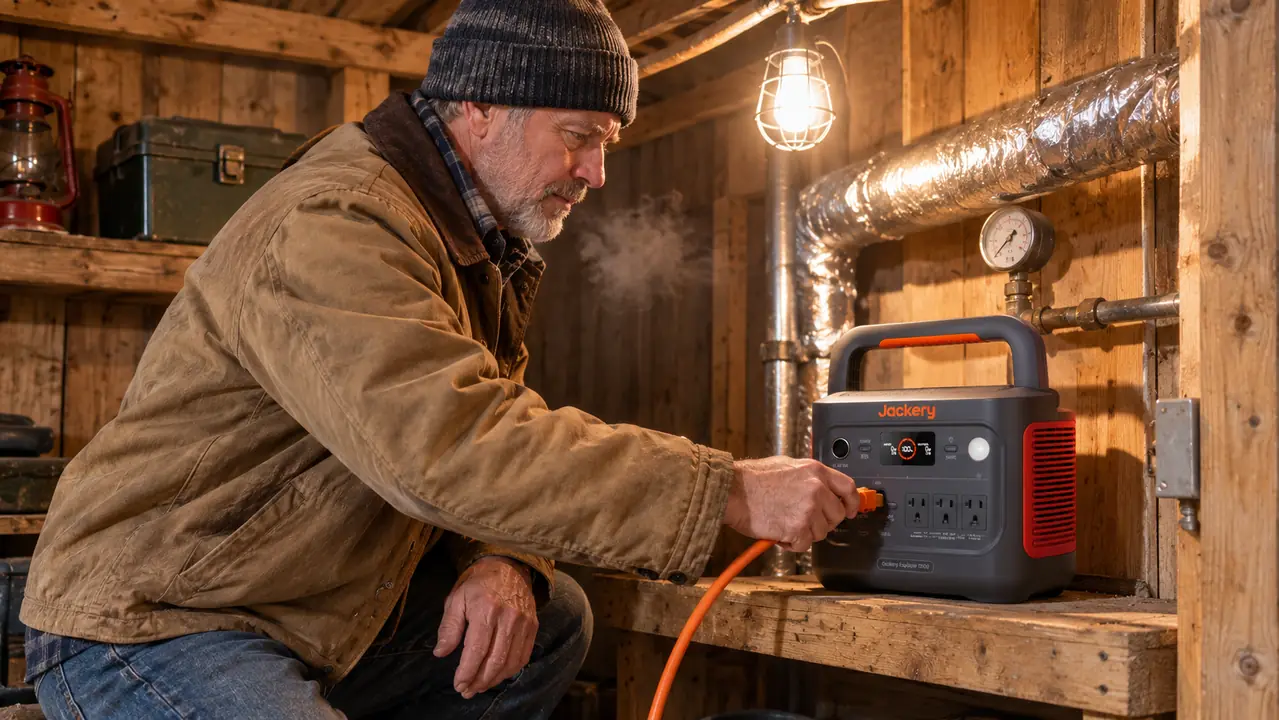
Let me start with the thing the title of this piece does not say out loud. Our well is a drilled well with a 240 volt submersible pump down the hole, and this unit puts out 120 volts. It does not run that pump, and no amount of wishing changes it. What it does run is the pump house, meaning the heat tape wrapped around the pressure line and the control circuit that keeps the pressure switch live. That turned out to matter more than I expected. Two winters back the line froze during a two day outage and I spent a whole afternoon with a torch and a bad attitude, thawing pipe in the dark. This winter the heat tape stayed live off the Explorer and I did not touch the torch once.
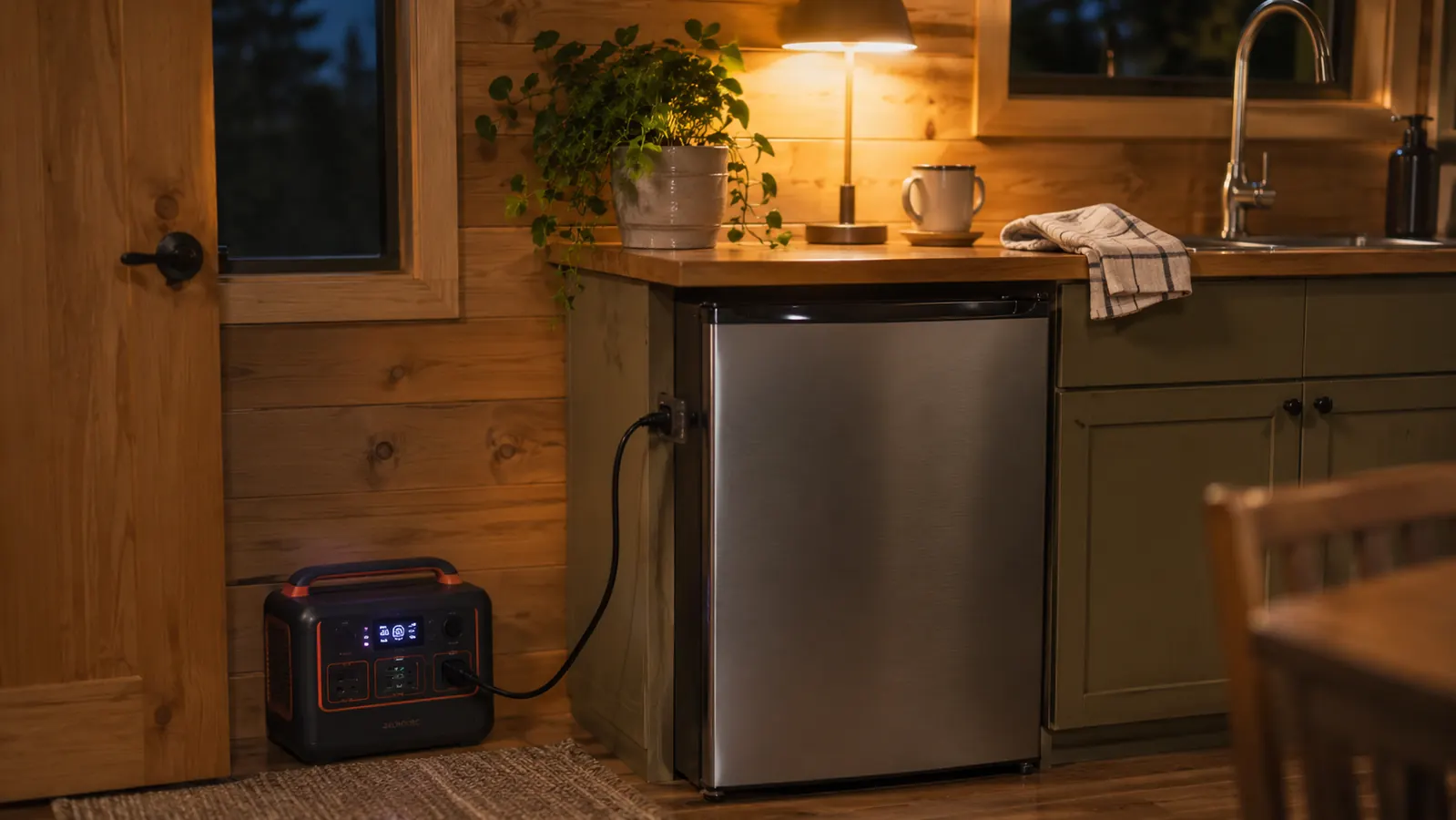
The rest of the load is ordinary and I am not going to dress it up. A small 120 volt fridge, the kind that fits under a counter. Two LED lights in the main room. Phone chargers, a radio by the wood stove, and once in a while the small inverter for Dana's sewing machine. The point of a unit this size in a cabin is not to run your life. It is to keep four or five specific things alive during the hours when the main bank is thin, so you are not standing in the dark at seven in the evening making decisions with a flashlight in your teeth.
I also put it to work outside the shed, which is where a portable unit earns its keep. Jackery rates the continuous output at 1,500 watts, and that was plenty for a circular saw while I framed a lean-to onto the shed in October, and plenty for the shop vac afterward. Neither is a hard test for that number, but both are the kind of job that used to mean dragging a cord across the yard from the main inverter. The whole unit sat on the tailgate of the truck and I carried it to wherever the work happened to be.
One habit worth mentioning, because it changed how I used it. I stopped treating it as an emergency box under a shelf. It lives out in the open now, on a low shelf by the door, plugged into the house circuit so it stays topped up and takes over on its own when the source drops. Gear you have to dig for is gear you do not use. Gear that is already wired in is gear that quietly saves you an evening.
What 1,024 Watt Hours Actually Covers
Here is the arithmetic, because a watt hour number on the side of a box means nothing until you set it beside your own loads. The battery holds 1,024 watt hours. A small fridge does not pull its rated watts all day. It kicks on, cools hard for a few minutes, and shuts off, and over a full 24 hours mine averages somewhere around 35 to 40 watts. Run the numbers and that is roughly 850 to 950 watt hours if it ran a whole day on this unit. Which means a full day of fridge duty would very nearly empty the battery, and a hot July afternoon would push past what the unit holds.
So I did not run the fridge on it all day, and I do not think you should plan to. I ran it from supper until morning, maybe ten hours, while the house bank recovered and the sun was down anyway. That is somewhere in the neighborhood of 350 to 400 watt hours, and it left a comfortable margin for the heat tape and the lights. The fridge stayed cold, the ice in the little freezer tray stayed ice, and I stopped waking up at two in the morning to check the inverter.
The lesson from four months of this is that 1,024 watt hours is a night's worth of ordinary cabin load, not a day's. That sounds like faint praise and it is not meant to be. A night is exactly the window where things go wrong, because that is when the sun is gone and the temperature drops and you are asleep and not watching anything. Judged as a night battery that you can also carry to a job site, it is well sized. Judged as a whole cabin solution, it is not, and nobody honest should tell you otherwise.
The Well Pump, the Surge, and 1,500 Watts
The 1,500 watt figure is continuous output, and the number that matters more with motors is what happens in the half second when they start. A motor running at 800 watts can pull two or three times that to get moving. I tested the Explorer on a 120 volt transfer pump I use to push water from the creek up to the garden, an old cast iron thing that has always been fussy about starting on a small inverter. It started it without complaint, and it started it again the next morning after sitting out overnight in cold that had the hose stiff as a fence post.
A 240 volt submersible is a different animal entirely. Mine hangs about 180 feet down the hole and takes a hard surge to turn over, which is why it stays on the main system and always will. If your well pump is a shallow 120 volt jet pump on a sand point, or a cistern pump, this unit is worth a serious look, because it will likely start it. If you have a deep submersible, plan on this unit keeping the pump house warm and the controls alive rather than lifting water, and size your expectations to that before you spend anything.
It started a fussy old cast iron pump on the first try, twice. It will not start a 240 volt submersible. I would rather tell you that than sell you a story.
The other half of that question is the 10 millisecond switchover, which is the feature I did not expect to care about. Plugged into a house circuit, the unit passes power through and takes over in about ten milliseconds when the source drops. Ten milliseconds is fast enough that a fridge compressor does not notice and nothing on the counter resets. I checked it the crude way, by killing the main breaker while the fridge was running and standing there listening. No click, no restart, no drama. A clock radio that had been blinking since the last outage kept its time, which is a small thing that made me laugh.
Keeping It Charged in a Winter That Gives You Nothing
Charging is where a winter cabin separates the useful units from the decorations. Jackery claims 0 to 100 percent in 50 minutes on a wall outlet, and I timed it twice off our inverter and got 52 and 55 minutes. That is close enough that I am not going to argue with the box. The speed matters more than it sounds like it would, because when your charging window is a two hour stretch of decent sun and you have three other things to do before it closes, a fast charge is the difference between getting it done and putting it off until tomorrow.
Solar is slower and more honest about the season. In November and December, up here, a panel under a gray sky gives you very little, and there were stretches when the Explorer sat at 40 percent for days on end. I did not fight it. I charged it from the main inverter on the days the bank was full, which is the same discipline I use for everything else in that shed. If you are counting on northern winter sun to keep a unit like this topped up, you will be disappointed, and it will not be the unit's fault. That is the season, not the box.
One more thing, and it cost me an evening to learn. Lithium iron phosphate does not love the cold any more than lead acid does, and my shed drops near zero in a hard snap. I started hauling the unit inside on the worst nights, which rather defeats the purpose of a shed, so I cleared a shelf in the main room for it instead. Since then it has been fine and I have stopped thinking about it. If your plan is to leave it in an unheated outbuilding from October to April, think that through before you buy.
Weight, Outlets, and the Small Things That Add Up
Jackery lists it at 23.4 pounds, and the foldable handle actually works, which is not always true of handles on things this size. I carry it from the shed to the house with one hand and a flashlight in the other. Dana can lift it onto the counter without asking me for help, and that matters more every year, to both of us. I have owned inverters that weighed twice as much and had to live in one place forever because moving them was a two person job with a bad temper attached.
The outlet layout covers what a cabin actually uses. Two pure sine wave AC outlets, two USB-C, one USB-A, and a 12 volt car socket. Pure sine wave is the part to pay attention to if you are running a fridge or a furnace control board, because modified sine wave and compressor motors do not get along over the long haul. There is app control as well, and I used it a handful of times to check the state of charge from the house rather than walking out into the cold, which was pleasant. Beyond that I did not need it, and I would not buy the unit for the app.
What it replaced is worth naming too. No fuel to haul, no oil to check, no pull cord, no exhaust drifting into the shed, and nothing to listen to. I have spent enough evenings standing next to a generator with my ears ringing to appreciate a box that just sits there. It is not a heroic piece of equipment. It is a quiet one, and quiet is most of what I want out of a backup.
What I Liked
- Carries a fridge overnight and still leaves margin for lights and heat tape
- About 23 pounds with a handle you can actually use, so it moves between shed and house
- Pure sine wave AC outlets, which a compressor motor will thank you for
- 0 to 100 percent in roughly 50 minutes on AC, which fits a short winter charging window
- 10 millisecond switchover is quick enough that the fridge never notices
- No fuel, no exhaust, no pull cord, nothing to listen to
- Lithium iron phosphate chemistry takes daily cycling better than the older packs did
Where It Falls Short
- 1,024 watt hours is one night of cabin load, not a full day
- It will not start a 240 volt submersible well pump, so plan around that
- Northern winter sun will not keep it topped up on its own
- The app is fine but adds nothing I needed
- Cold weather means bringing it inside, which is one more thing to remember
Who This Is For
This is for the cabin or camp owner who already has a main system and wants a second line of power that does not weigh a hundred pounds. It suits a small fridge, a few lights, a fan, a CPAP, phone and radio charging, power tool batteries, and a pump house that has to stay above freezing. It suits somebody who wants to carry the same unit to a job site or a tent and actually use it there, because it is light enough that you will. If you run a shallow 120 volt pump, it will likely start it, and that makes it more useful than the watt hour number suggests. And if you are putting together a first small setup for a hunting camp or a shed, this is a reasonable place to start, with the plain understanding that you will be adding to it later.
Who Should Skip It
Skip it if you are expecting to run a house. A 1,500 watt output will not start a central air conditioner, a 240 volt well pump, or an electric water heater, and no amount of careful reading changes that. Skip it if your main bank is tired lead acid, because a small battery will not fix a system problem, it will only postpone the afternoon when you have to deal with it. And skip it if you will not keep it charged. A unit like this left sitting at 30 percent for three months is a unit you will be replacing, and the fault will not be the manufacturer's. Buy it for the job it does well and it will earn its shelf space, which is more than I can say for most of what I have tried out there.
If What You Need Is a Night Battery, Not a Whole House, Start Here
Four months in a cabin that hits four below and gets almost no January sun. It kept the fridge cold and the pump house thawed, and it told me plainly what it could not do. That is worth more than a bigger number printed on a box.
Amazon Check Today's Price on Amazon →