
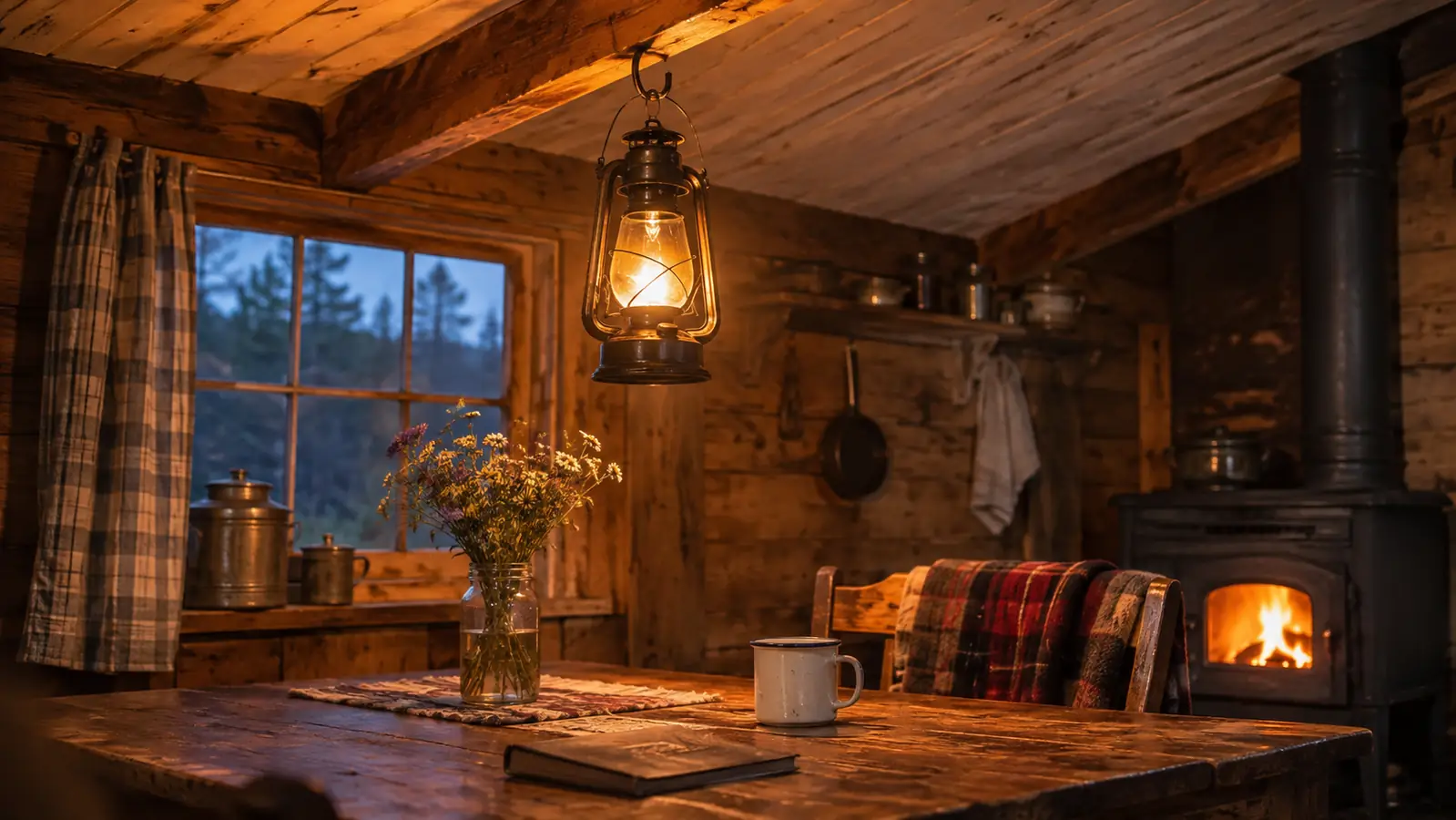
The first winter in this cabin, the lighting was one kerosene lantern and a headlamp. The kerosene stank, the chimney sooted up inside a week, and the headlamp picked the worst possible moment to fade to a dull orange. Dana started carrying a flashlight in her coat pocket the way other people carry keys. I am a millwright by trade and I have wired plenty of shops, so it stung a little to be beaten by something as simple as light in a room.
Six years in, the lighting here is settled, and it did not take an inverter, a wiring run, or an electrician. It took a few rechargeable LED lanterns, hung in the right places, charged on a schedule that follows the sun. The one I keep coming back to is the Lepro 1000LM rechargeable lantern. It carries a 4400mAh battery, four modes, and a 360 degree beam from 46 LEDs. It is not the only light in this cabin, but it is the one that taught me how to lay out the rest.
The light I hand people when they ask what to start with
The Lepro 1000LM runs up to 12 hours on a charge, hangs from a hook at either end, and sits flat on a shelf when you want it there. One of these covers a main room. The second one is the one you will be glad about.
Amazon Check Today's Price on Amazon →Step 1: Count the dark corners before you count lumens
Most people start by shopping for the brightest lantern they can find and then wonder why the cabin still feels dim. That is backwards. The first number that matters is not lumens, it is how many separate pools of light the place needs, because one very bright light in the wrong spot leaves everything else in shadow and glare at the same time.
In a 24 by 32 foot cabin I need three zones. The main room, which is kitchen, table and sitting area in one, wants a light hung high and central. The loft wants a second one, lower and closer to the bunks, because you should not have to flood the whole cabin to find your socks at five in the morning. The third zone is the entry: a hook by the door for a light that walks out to the porch or the path with you. Three zones, plus a fourth lantern kept charged on a shelf as a spare, and I have not run out of light yet.
Walk your place at dusk with a notebook before you spend anything. Mark where you squint, mark where the shadow falls across the table, mark the corner you never quite trust. Most folks find they need fewer lanterns than they guessed and better placement than they planned. Two hung well will beat five sitting on tables, and finding that out costs nothing but a slow lap around the room with your hands in your pockets.
I did that lap in October of the second year, on a Tuesday, with a pencil stub and the back of an envelope. What I found surprised me. The corner I had been sure was the problem, over by the bookshelf, was fine once the light came from above. The real problem was the stretch of counter between the stove and the sink, where I had been standing with my own shadow across the cutting board every night for two years without once naming it. That is what a notebook gets you that memory does not. The spot you fuss over is rarely the spot that is actually dark.
Step 2: Hang it high and let the ceiling carry the light
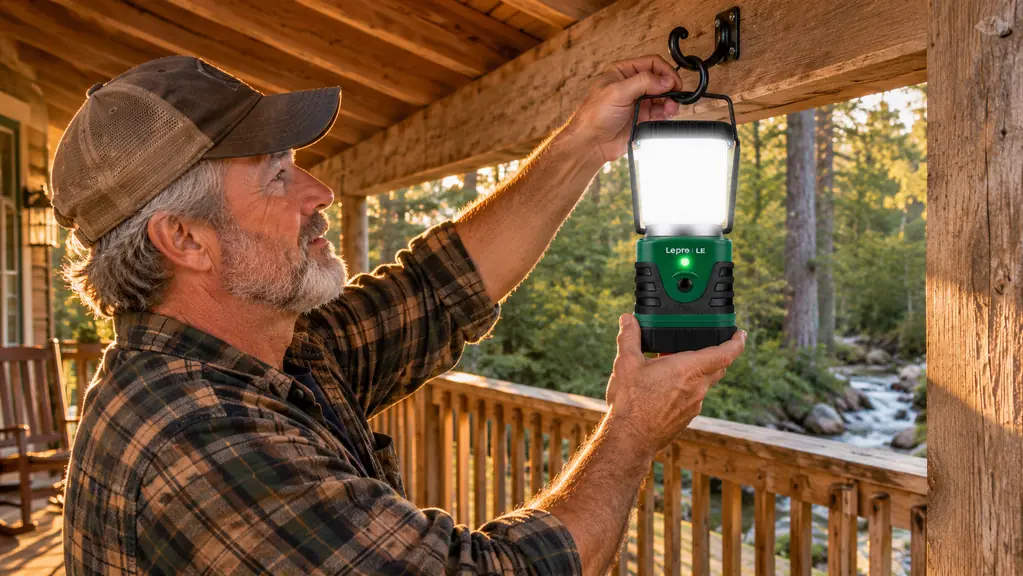
A lantern on a table lights a circle about two feet wide and puts the source right at eye level, which is exactly where you do not want it while you are reading or eating. Hang it instead. The Lepro has a hook at the top and another at the base, so it will hang either way up, and it throws light in a full 360 degrees rather than aiming a beam at one wall and leaving the rest of the room to fend for itself.
Get it near the ceiling and let the room finish the job. My main room has a pale plank ceiling, and one lantern up at the ridge on a middling setting fills more usable space than the same lantern on the table at full brightness. The light comes down off the ceiling and spreads. On the table it goes straight into your eyes and leaves the corners black. Same lantern, same battery, completely different room.
Height also keeps the thing out of your way. Hung means no cord dragged across the supper table, nothing knocked onto the floor by a sleeve, and nothing to shift when you want the table clear for a project. I use a plain cup hook turned into a rafter with a pair of pliers. The lantern comes down in about two seconds when I want it in my hand, which is the whole point of a lantern in the first place. I tried a nail first because a nail was what was in my pocket, and the lantern swung every time the stove door shut. The cup hook holds it steady, and it cost about a dollar.
Step 3: Match the mode to the job, not to the mood
Four modes sounds like a line off the box until you have spent a winter with a light that only has one. The Lepro steps up through four settings and the top of that range is the full 1000 lumens. What matters in a cabin is that you can also go down, all the way to a low glow that does not wreck your eyes when you get up in the night for a glass of water.
My rule is that the brightest setting is for work and the rest are for living. Cooking, sorting a coffee can of screws, or planing a sticking drawer gets the top end, with the lantern hung close to the bench. Supper, reading, or sitting with Dana after the dishes gets a middle setting from the ridge hook. The lowest setting is honestly the one that runs the most hours here: a dim light in the main room while I climb to the loft, and a second low lantern by the door so nobody is hunting in the dark.
One caution, learned the slow way. Running full brightness from suppertime to bedtime is how you find out what a 4400mAh battery really holds, and the answer is not a whole evening. You paid for four modes, so use them, and the charge will carry you to morning instead of dying quietly at nine o'clock while you are halfway through a chapter.
Step 4: Charge on a schedule that follows the sun
The lanterns are only as good as the routine behind them, and off the grid that routine is set by the weather rather than by convenience. I charge in the morning, when the array on the ground mount is making power and the battery bank is not being asked for much else. The lanterns take 5 volts, which is a small draw, and doing it early means the sun is paying for it instead of the bank.
The habit is simple enough to keep. Every lantern comes down and lands on the shelf in the power shed on Sunday morning, and every one goes back up charged that afternoon. Two of them run every night, so a Sunday rotation always leaves me one full spare. If the forecast is calling for three grey days, I charge early and I drop the main room to the lower settings after supper. That is the whole system, and it takes about ten minutes a week.
Two things I learned the hard way. Do not park a lantern at zero for months on end, because the battery will sulk and come back with less than it had. And in a cold snap, bring the spare in from the shed. A battery that sat at twenty degrees overnight will not give you the hours it gives at room temperature, and the night you need it is a poor night to find that out. The February I learned that one, the shed thermometer read eleven degrees at seven in the morning and the spare gave me barely an hour before it went soft.
Step 5: Give every lantern a home, and put one outside
The last piece has nothing to do with output. It is about never hunting for a light in the dark. Every lantern in this cabin has a hook, and every hook has a lantern on it once the sun is down. One at the ridge, one on the loft rail, one by the door, one on the shed shelf. Nobody here asks where the flashlight is anymore, because the answer is always the same. It is hanging where it belongs.
The one by the door earns its place outside. The Lepro is rated waterproof, so it hangs under the eave on the porch through a rainy night and I do not think about it again until morning. That one does more for how the place feels than anything inside. Coming up the path from the creek at dusk with a single warm light on the porch is a small thing, and I am grateful for it more evenings than I can count.
Give the spare a home too, or it will end up in a drawer under a tarp. Mine lives on the shed shelf next to the charge spot, and that is deliberate: a spare you have to go looking for is not a spare. When a lantern comes down for charging, the charged one goes straight up in its place. After a couple of months the swap is muscle memory, and the cabin never goes dark for want of a light that was ready.
One lantern at the ridge on a middling setting, and I can read a paperback in the far corner of a 24 by 32 foot room.
What Else Helps
Lanterns do most of the work, but three cheap things made this place feel properly lit. The first is a headlamp hanging by the door for hands-free jobs and the walk to the woodpile. The second is a pale ceiling and pale walls, which is not a lighting purchase at all and still does more for a room than a brighter bulb ever will. The third is a cup hook in every spot you have ever wished for one, because placement beats output every single time.
It is also worth timing your evening around the light rather than the clock. In winter I cook while there is still daylight through the window and save the lantern hours for after supper, when I actually want them. That one adjustment added years to nothing, but it added hours to every charge, and it cost me nothing but a slightly earlier start on the stew.
One more small thing, and it is the cheapest of the lot. I painted the inside of the loft stairwell a flat pale color the third summer here, one afternoon and half a can, and it changed how the whole middle of the cabin reads after dark. Light that used to die in that stairwell now bounces back out into the room. If you are lighting a place on lanterns alone, every pale surface is working for you and every dark one is taking a cut.
I keep two oil lamps in the cupboard too, and I will tell you plainly why. They are not better light. They are there for the night the power shed has a problem and I want a light that does not care about batteries at all. Six years in, I have lit them twice. Sleeping easier is worth the shelf space.
Hang one at the ridge and see what your cabin does
It comes with a one year warranty, charges off a small 5 volt load, and asks for nothing but a spot in the sun once a week. Start with one, add the second when you find the corner it does not reach.
Amazon Check Today's Price on Amazon →