
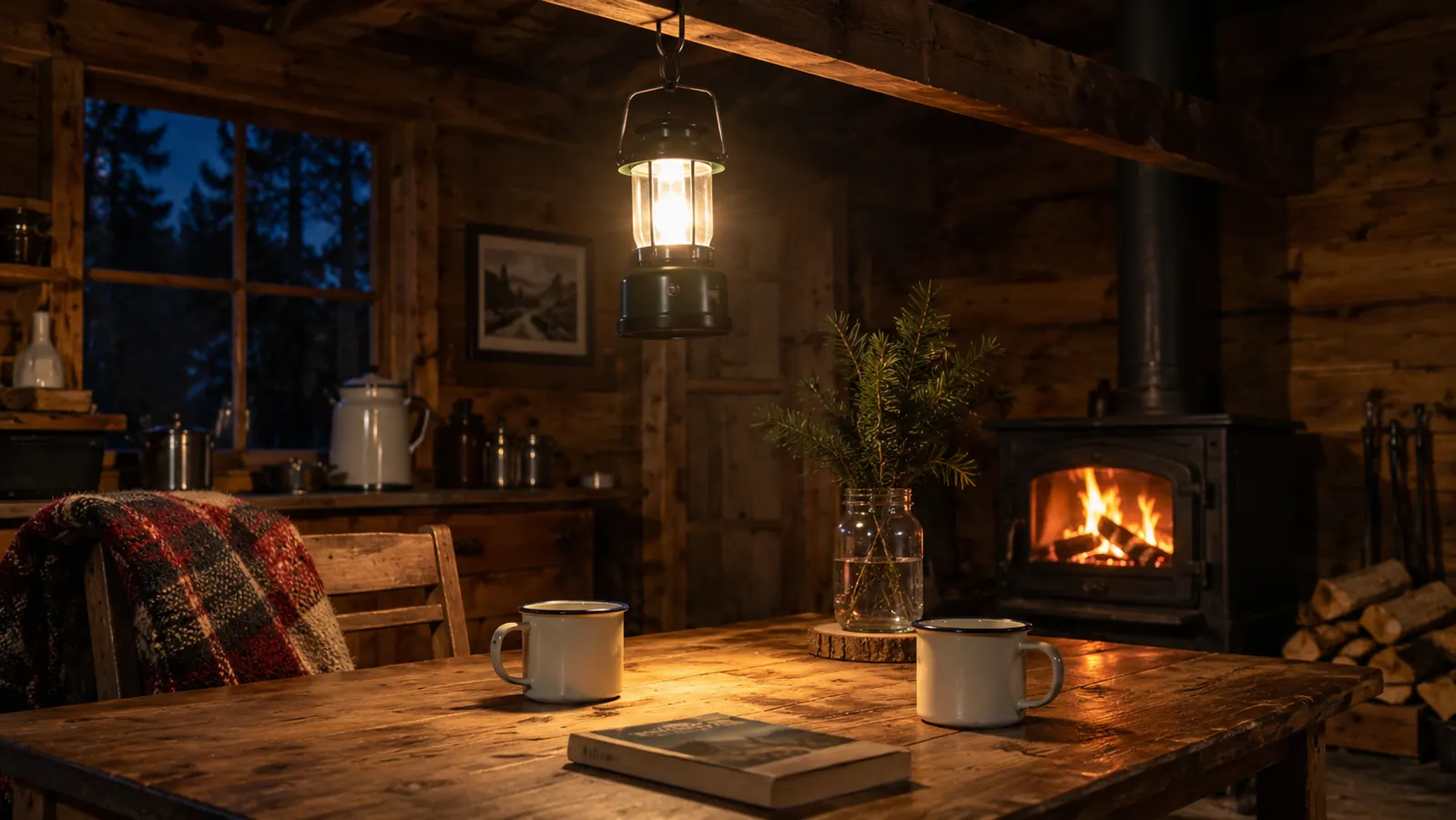
The storm took the line down at 9:40 on a Tuesday in February. I know the time because I was standing in the kitchen with a spoon in my hand, and the clock on the stove went dark mid-bite. What happened next is the part I am not proud of. I opened the junk drawer by the door and started digging.
Four of them inside. Every one dead. Two had batteries that had leaked and crusted over. One clicked and gave nothing. The fourth worked if I held it at the right angle, which meant I was standing in my own kitchen holding a light like a man trying to catch a signal. Dana came in with a candle. Six years off the grid and a candle is what we had. That night I ordered a Lepro rechargeable lantern, the 1000 lumen one, and I have not dug through that drawer since.
Here is what I had been doing wrong for years. I treated light as a consumable. Buy a pack of flashlights, burn through the batteries, buy more. A flashlight is a tool that lives in a drawer and is only as good as the last time somebody remembered to check it. A rechargeable lantern is a tool that lives where you use it and gets topped up on a schedule you already keep, because you already charge things.
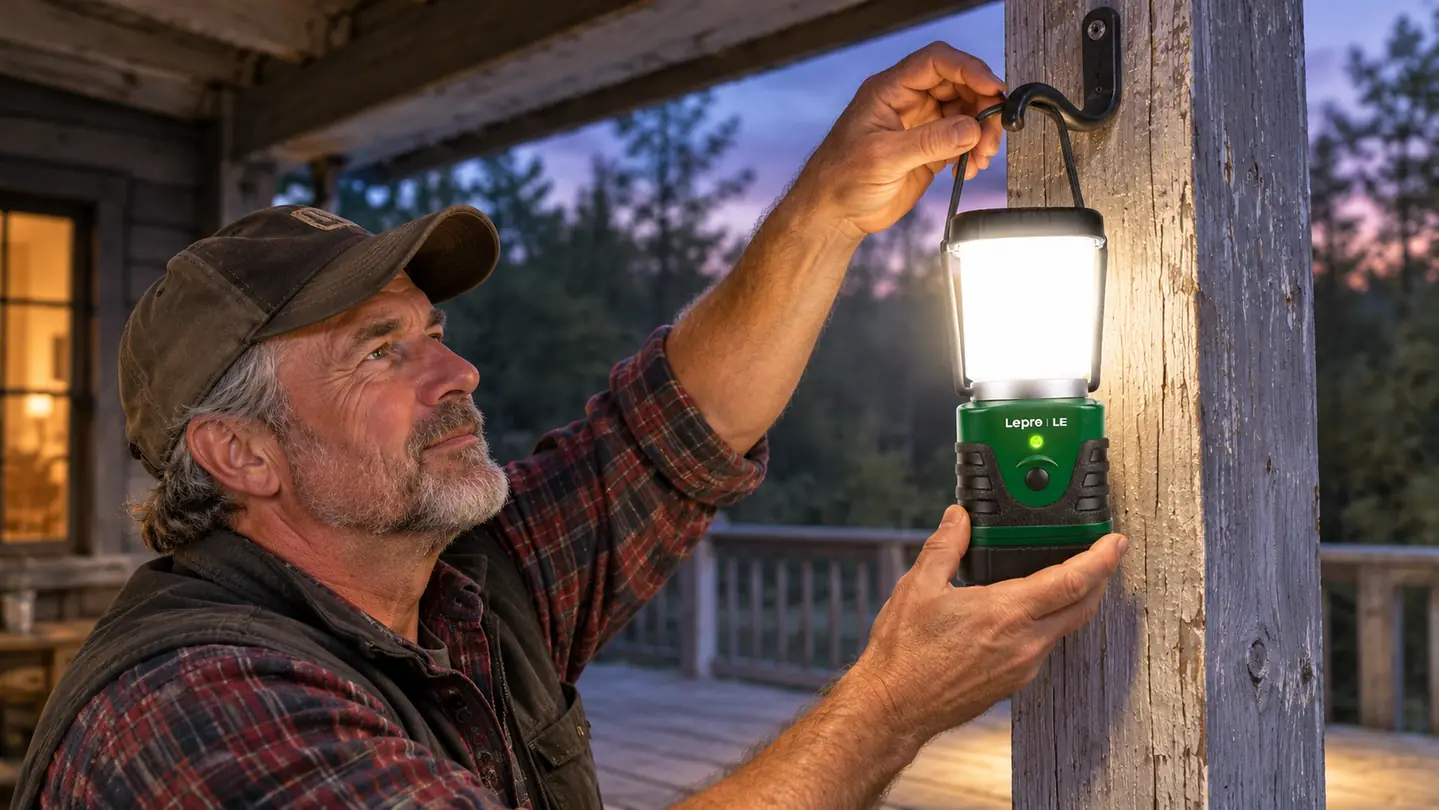
The Lepro lantern arrived in a plain box. I set it on the counter and charged it off the same 5 volt brick I use for my phone. The battery is 4400mAh, and by the rating it will run up to 12 hours depending on which mode you are in. I have not once run it flat on a normal night's use. It has a hook on top and a hook at the base, which sounds small until you have tried to prop a flashlight against a kettle.
There are four modes and I use three of them. The low setting is the one that earns its keep. It sits on the kitchen table in the evening and puts out enough light to read a page or mend a jacket without turning the whole cabin into an operating room. The bright setting is for the power shed, or for walking the lane to the mailbox after the plow has buried the path. The 360 degree beam is the part that changed how I work. A flashlight throws a cone and you aim it. This one lights the room.
Six years off the grid, and what I actually needed was one light that lived by the door and was always charged.
The light that lives by the door and is always charged
A 1000 lumen rechargeable lantern with a hook on top and a hook at the base, four modes, and up to 12 hours of run time. It is the first thing I reach for when the line goes down.
Amazon Check Today's Price on Amazon →The February outage ran three days. The well pump is on the solar backup, so water was not the problem. Light was. I hung the lantern from the beam hook over the kitchen counter after dark, and we ate supper, played cards, and read. On the second night I carried it out to the power shed while I checked the charge controller. It lit the whole shed, and that shed has a low ceiling and no windows worth mentioning.
It rained on the third day, sideways, the way it does here. The lantern sat out on the porch rail through it because I had set it down and forgotten it. It is rated waterproof and it came through without a complaint. I would not leave it out in a storm on purpose. I just would not worry much if I did.
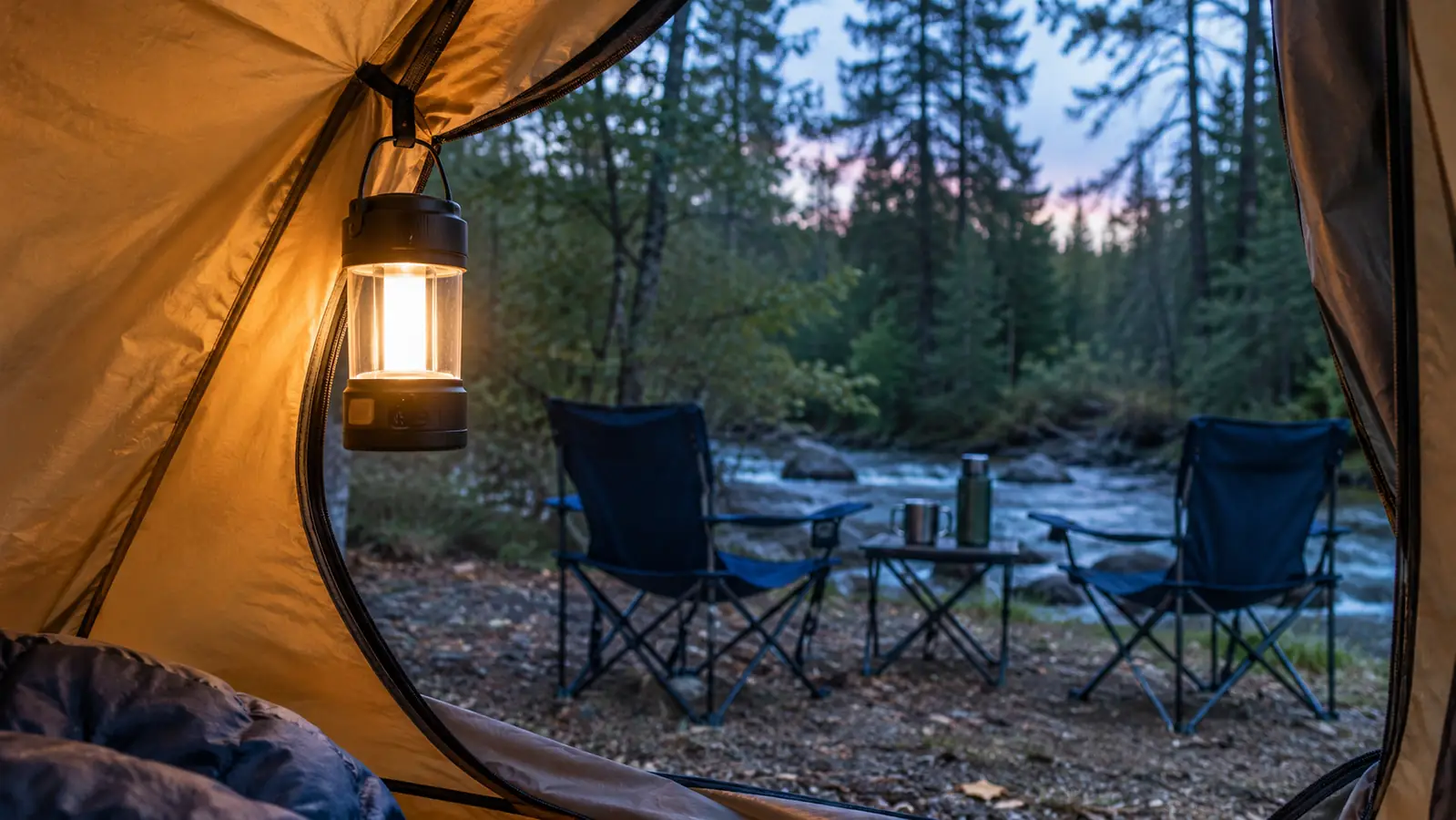
We take it camping on the creek in the summer. It hangs from the loop inside the tent and gives us enough light to find a sock at two in the morning without waking Dana. Set on the picnic table it lights the whole site for cards. The 46 LEDs run cool, so I do not think twice about a guest grabbing it by the handle.
What it does not do. It is not a spotlight. If you want to throw a beam across a field to find a downed line, this is not that tool and it was never meant to be. The body is plastic, light enough to carry one-handed and light enough to slide off a tailgate onto gravel. Mine has a scuff on the rim and it still works fine. And on the brightest setting you will notice the battery, so if you need hours at full brightness, plan on a second light or a top-up.
Dana's test for gear is whether it moves into the house and stays there. The Lepro moved in. It hangs on a hook by the door now, next to my coat, and it gets plugged in on Sunday when I do the phone and the radio. That is the whole system. One hook, one charger, one habit.
What I'd Tell You If We Were Sitting at My Kitchen Table
If you are building out a place that runs on its own power, you will spend real money on the things that keep you warm and the things that keep the water moving. Light is what people leave until the first outage, and then they buy eight flashlights. Do not do that. Buy one lantern you can hang, charge it before you need it, and put a second one in the truck if you want to be thorough. Lepro is not the only outfit making these, but it is the one hanging by my door after two winters, and it has not given me a reason to look elsewhere. The listing carries a 4.6 out of five across a lot of buyers. My experience lines up with it.
One more thing, and this is the plain truth. The night the line came back, I did not put the lantern away in a drawer. I left it on the hook by the door where it lives now. I am grateful for a warm cabin and for a light that comes on when I reach for it, and I try to say so out loud once in a while. That hook is the highest compliment I can pay a piece of gear in this house.
The one I would put on your wall
Hang it, charge it on Sunday, and stop hunting through the drawer in the dark. Four modes, up to 12 hours, and a hook on both ends.
Amazon Check Today's Price on Amazon →